This post has already been read 28 times!
Car overheating is one of the most common and serious problems drivers face. If left unchecked, it can lead to costly engine damage or even complete engine failure. Understanding what causes a car to overheat can help you recognize warning signs early and prevent major repairs.
How the Engine Cooling System Works
Your car’s engine generates a lot of heat while running. The cooling system keeps the engine at a safe temperature using coolant (antifreeze), a radiator, a water pump, fans, and a thermostat. When any of these components fail, heat builds up faster than it can be released—causing overheating.
Common Causes of Car Overheating
1. Low Coolant Levels
Coolant absorbs heat from the engine and releases it through the radiator. Low coolant—often caused by leaks—reduces the system’s ability to regulate temperature.
Common leak sources include:
- Radiator hoses
- Radiator cracks
- Coolant reservoir
- Water pump seals
2. Faulty Thermostat
The thermostat controls coolant flow. If it gets stuck closed, coolant cannot circulate, causing the engine temperature to rise quickly.
3. Radiator Problems
A radiator can become clogged with dirt, debris, or internal corrosion. This prevents heat from escaping efficiently. A damaged or leaking radiator can also reduce cooling performance.
4. Cooling Fan Failure
Electric cooling fans pull air through the radiator, especially when the car is stopped or moving slowly. If the fan motor, relay, or sensor fails, the engine may overheat in traffic but cool down while driving.
5. Water Pump Failure
The water pump circulates coolant throughout the engine. A worn or leaking pump disrupts flow, leading to overheating.
6. Broken or Worn Drive Belt
Many water pumps are driven by a belt. If the belt slips or breaks, the pump stops working, causing a rapid rise in engine temperature.
7. Low Engine Oil
Engine oil reduces friction and helps carry heat away from moving parts. Low oil levels increase friction, which raises engine temperature.
8. Head Gasket Failure
A blown head gasket can allow exhaust gases to enter the cooling system or coolant to enter the engine. This often leads to rapid overheating and should be addressed immediately.
Driving Conditions That Can Cause Overheating
Even with a healthy cooling system, certain conditions increase the risk:
- Hot weather
- Heavy loads or towing
- Stop-and-go traffic
- Steep uphill driving
Warning Signs Your Car Is Overheating
- Temperature gauge rising into the red zone
- Steam coming from under the hood
- Coolant smell
- Engine warning light
What to Do If Your Car Overheats
If you notice signs of overheating:
- Pull over safely and turn off the engine.
- Allow the engine to cool completely.
- Never open the radiator cap while hot.
- Check coolant levels once the engine is cool.
- Seek professional inspection if the problem continues.
Preventing Car Overheating
- Check coolant and oil levels regularly
- Inspect hoses and belts for wear
- Flush and replace coolant as recommended
- Address warning lights immediately
Conclusion
Related Posts
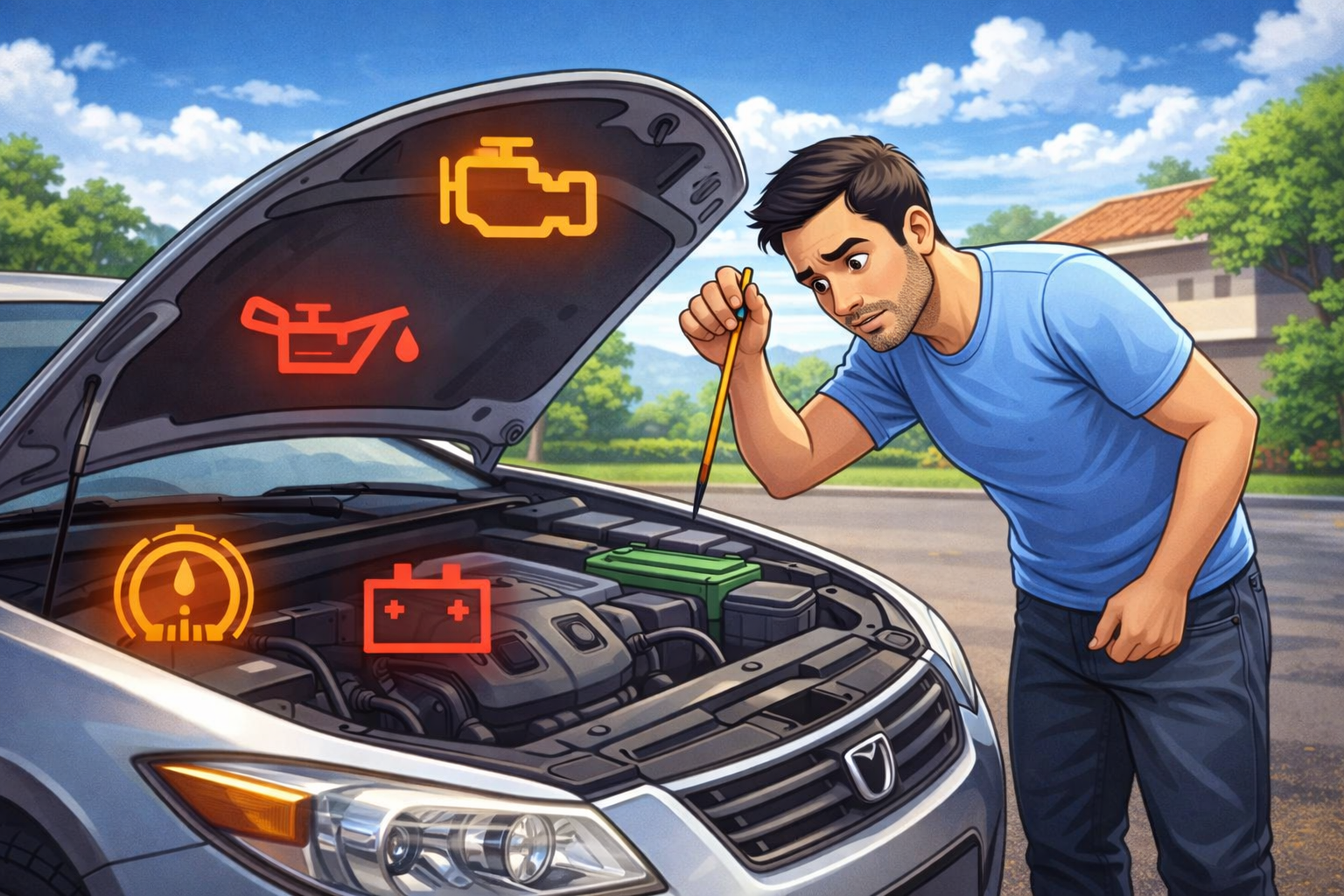
7 Simple Car Checks That Save You Big Money
Most car problems don’t start as “big problems.” They start…
The Most Common Car Problems Every Driver Should Know
Owning a car comes with freedom, comfort, and convenience —…