This post has already been read 27 times!
A shaking steering wheel at high speed is more than just an annoyance — it’s your car’s way of warning you that something isn’t right. While the vibration may feel minor at first, ignoring it can lead to unsafe driving, faster wear on parts, and costly repairs down the line.
Here’s a clear, human-friendly breakdown of why it happens, what it means, and how to fix it.
The most common causes of steering shake
1. Unbalanced wheels
This is the number one cause of steering vibration at highway speeds.
When a wheel isn’t balanced correctly, its weight isn’t evenly distributed. As speed increases, that imbalance becomes more noticeable.
What you’ll feel
- Steering shakes between 80–120 km/h
- Vibration fades or changes at different speeds
Solution
Wheel balancing — quick, affordable, and often done in under 30 minutes.
2. Uneven or worn tyres
Tyres that are worn unevenly don’t roll smoothly, especially at speed.
What causes it
- Skipping wheel rotations
- Poor alignment
- Old or low-quality tyres
What you’ll feel
- Constant vibration
- Increased road noise
- Visible uneven tread patterns
Solution
Tyre rotation, wheel alignment, or replacement if wear is severe.
3. Bent or damaged rims
Potholes, kerbs, and rough roads can bend wheels — sometimes without you noticing right away.
What you’ll feel
- Vibration even after balancing
- Steering wobble
- Possible slow tyre pressure loss
Solution
Rim repair or replacement, depending on damage.
4. Brake rotor problems
Warped or uneven brake rotors often cause vibration when braking, but severe cases can be felt even at speed.
What you’ll feel
- Steering shake when slowing down
- Pulsing brake pedal
Solution
Brake rotor machining or replacement.
5. Worn suspension or steering components
As suspension parts wear out, they allow unwanted movement in the wheels.
Common worn parts
- Tie rods
- Ball joints
- Control arm bushes
- Shock absorbers
What you’ll feel
- Steering looseness
- Clunking sounds over bumps
- Poor road stability
Solution
Professional suspension inspection and part replacement.
6. Wheel alignment issues
Misaligned wheels fight against each other at speed, causing instability.
What you’ll feel
- Car pulling to one side
- Nervous steering on highways
- Rapid tyre wear
Solution
Wheel alignment.
7. Failing wheel bearings (less common but serious)
A worn bearing can cause vibration and noise that worsens quickly.
What you’ll feel
- Humming or grinding noise
- Vibration increases when turning
Solution
Immediate replacement — this is a safety issue.
Why you shouldn’t ignore it
Driving with steering vibration can lead to:
- Faster tyre wear
- Suspension damage
- Reduced braking performance
- Loss of control at high speed
A small shake today can become a dangerous failure tomorrow.
Quick driver checklist
Before visiting a mechanic, check:
- Tyre pressure
- Visible tyre damage or uneven wear
- Whether vibration happens only when braking
- The speed range where shaking starts
This information helps diagnose the issue faster and cheaper.
Final thoughts
In most cases, steering shake at high speed comes down to wheel balancing or tyres — simple fixes if caught early. The key is not to ignore the warning signs.
Your steering wheel should feel steady, calm, and predictable. If it doesn’t, your car is asking for attention.
For more car care tips, ownership advice, and driving safety guides, visit lawicars.com.
Related Posts
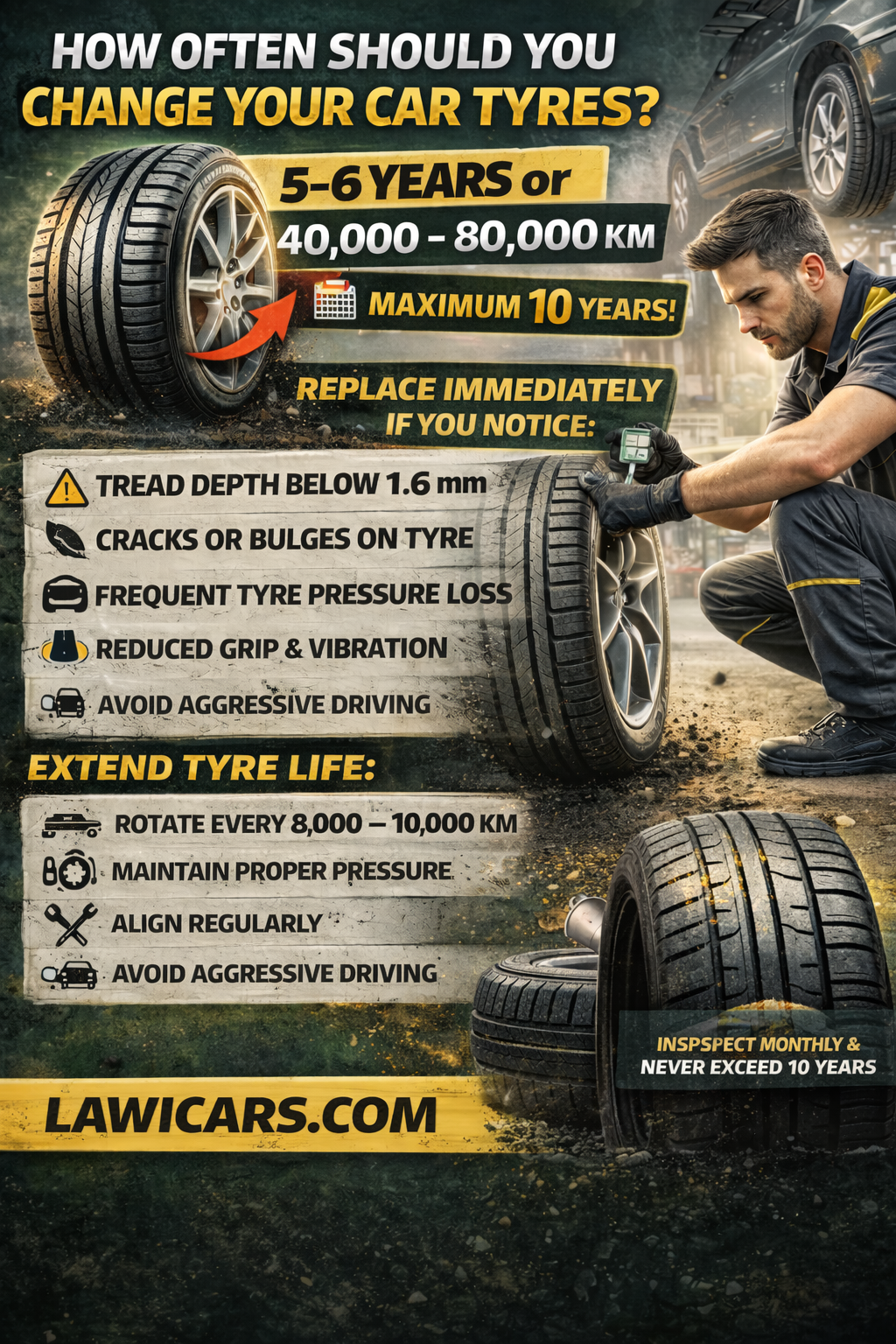
How Often Should You Change Your Car Tyres? A Complete Guide for Safer Driving
Your car tyres are the only part of the vehicle…