This post has already been read 19 times!
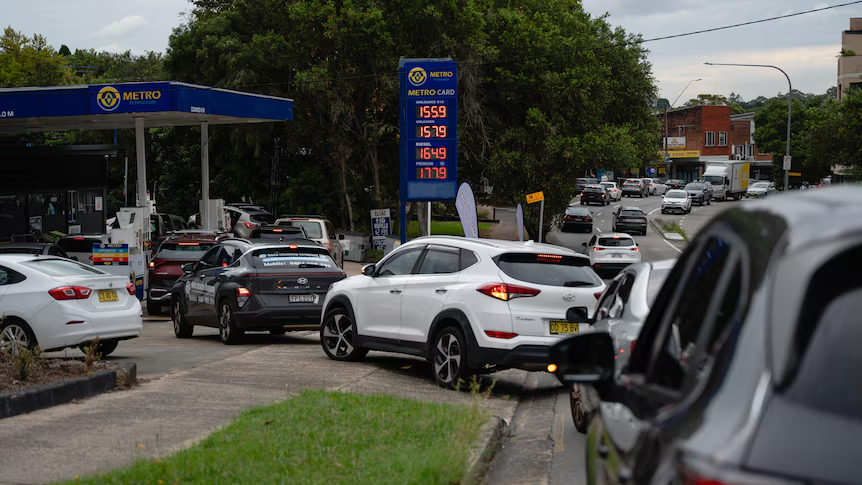
The global fuel market is entering a tense and uncertain period as the conflict involving Iran continues to raise serious concerns about oil supply.
While the fighting may seem far away, its effects are already being felt worldwide — and in the coming weeks, the impact could become even more visible in everyday life.
A Crisis Centred on Global Oil Supply
At the heart of the situation is the Strait of Hormuz, one of the most important oil transit routes in the world.
A significant portion of global oil shipments passes through this narrow waterway. Any disruption here — whether through military tension, damaged infrastructure, or restricted shipping — immediately reduces supply to international markets.
When supply drops, and demand remains steady, prices naturally rise. That is exactly what we are beginning to see. Oil markets are reacting quickly to uncertainty, and even small escalations can trigger sharp price increases.
What to Expect in the Next Few Weeks
In the short term, fuel prices are likely to continue climbing. Petrol stations may begin adjusting prices more frequently, and consumers could notice steady increases rather than sudden spikes. This gradual rise often feels less dramatic, but over time, it has a strong effect on household budgets.
At the same time, prices may become more unpredictable. Markets are reacting to news in real time — meaning a single development in the conflict can cause prices to jump or fall within hours. However, despite these fluctuations, the general direction is expected to remain upward.
Even if tensions ease, prices are unlikely to fall quickly. Oil infrastructure, shipping routes, and supply agreements take time to stabilise. This means the effects of the conflict could last well beyond the immediate headlines.
The Wider Impact on Daily Life
Fuel is not just about what we pay at the pump — it influences nearly every part of the economy. As fuel becomes more expensive, transport costs increase. Businesses then pass these costs on to consumers.
This leads to a chain reaction:
- Food prices rise due to higher transport and production costs
- Delivery and logistics become more expensive
- Electricity and heating costs increase in some regions
In countries like Australia, where goods often travel long distances, the impact can be even more noticeable. Over time, this contributes to inflation, making everyday living more expensive.
Possible Scenarios Ahead
If the conflict continues at its current level, the most likely outcome is a steady increase in fuel prices combined with ongoing uncertainty. Markets will remain sensitive, and prices will continue reacting to developments on the ground.
If the situation escalates further, the consequences could be more severe. A larger disruption to oil supply could lead to shortages in some regions and significantly higher global prices.
On the other hand, if tensions ease, the market may stabilise — but not immediately. Prices may stop rising, yet remain elevated for some time as supply chains recover.
Future!
The coming weeks will be critical for global energy markets. The situation involving Iran is not just a regional conflict — it is a key factor shaping fuel prices worldwide.
For individuals, this means preparing for higher costs and staying aware of how global events can directly affect daily life. For economies, it represents another period of pressure and adjustment.
In simple terms, the message is clear:
Fuel prices are likely to rise, remain unstable, and influence the cost of living in the weeks ahead.
Related Posts
When Will Fuel Prices Rise or Fall? A Clear Outlook for 2026
Fuel prices remain one of the most closely watched costs…

A visit to Australia has Ford’s Jim Farley reconsidering a long-dead performance ute formula that once defined the country’s car culture
Australia has always had a unique relationship with cars. Unlike…
Why Many People Still Prefer Fuel Cars Over Electric Vehicles
Electric vehicles (EVs) are becoming increasingly popular around the world.…