This post has already been read 15 times!
Fuel prices remain one of the most closely watched costs for households and businesses, and right now, the global outlook suggests more pressure at the pump before any real relief arrives. While prices may fluctuate week to week, the bigger picture shows a clear trend driven by global events, supply concerns, and economic uncertainty.
Short-Term Outlook: Prices Likely to Rise
In the immediate weeks ahead, fuel prices are more likely to rise or remain elevated. This is largely due to instability in global oil supply, particularly around key shipping routes such as the Strait of Hormuz, where even minor disruptions can push oil prices higher very quickly.
Oil is traded globally, and when international prices rise, Australian petrol prices follow almost immediately. That’s why motorists can sometimes see sharp increases within days, even without any local changes.
At the moment, the market is reacting to:
- Geopolitical tensions affecting oil transport
- Tight global supply levels
- Continued strong demand
All of these factors point to upward price pressure in the short term.
Medium-Term Outlook: High and Unpredictable
Over the next two to three months, fuel prices are expected to remain volatile and relatively high. This means prices may go up and down, but they are unlikely to drop significantly.
Australia’s fuel supply system also adds to the uncertainty. With limited fuel reserves, the country is more exposed to global price shocks than many others. Any disruption overseas can quickly translate into higher costs locally.
There may be short-term relief through:
- Government interventions (such as fuel tax adjustments)
- Temporary dips in global oil prices
However, these are often short-lived and do not change the overall trend.
Long-Term Outlook: Possible Relief Later in the Year
Looking further ahead into late 2026, there is a realistic chance that fuel prices could stabilise or begin to fall—but only under the right conditions.
Prices may ease if:
- Global conflicts reduce or stabilise
- Oil production increases
- Supply chains return to normal
If these improvements happen, motorists could finally see more consistent and lower pricing. However, if instability continues, high fuel prices could remain for much longer.
What Is Driving Fuel Prices Right Now?
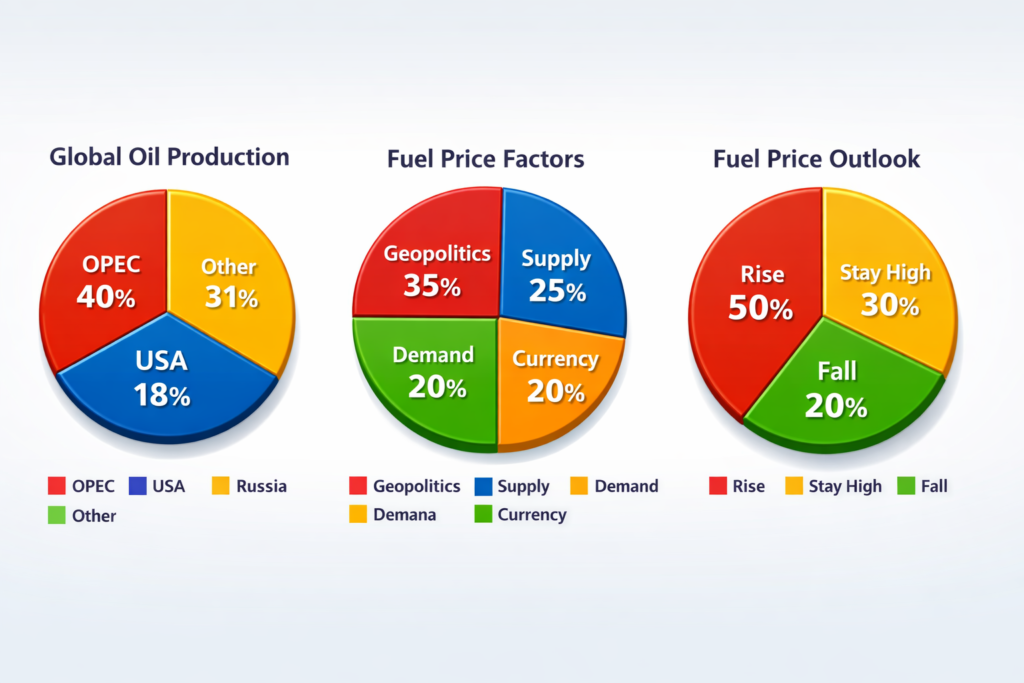
Fuel prices are influenced by several key global factors:
- Geopolitics: Conflicts and tensions in oil-producing regions
- Supply and demand: Limited supply with strong global demand
- Oil production decisions: Especially from major producers
- Currency exchange rates: A weaker Australian dollar can increase fuel costs
- Government policies: Taxes, subsidies, and regulations
At present, geopolitical uncertainty is the dominant force, making prices harder to predict and more likely to rise.
Chats Representation
Related Posts

Fuel Prices Set to Surge: What the Iran Conflict Means for the Coming Weeks
The global fuel market is entering a tense and uncertain…

A visit to Australia has Ford’s Jim Farley reconsidering a long-dead performance ute formula that once defined the country’s car culture
Australia has always had a unique relationship with cars. Unlike…
Which Countries Sell the Most Cars? And Who Is Rising Fast?
The global car industry is enormous. Each year, tens of…