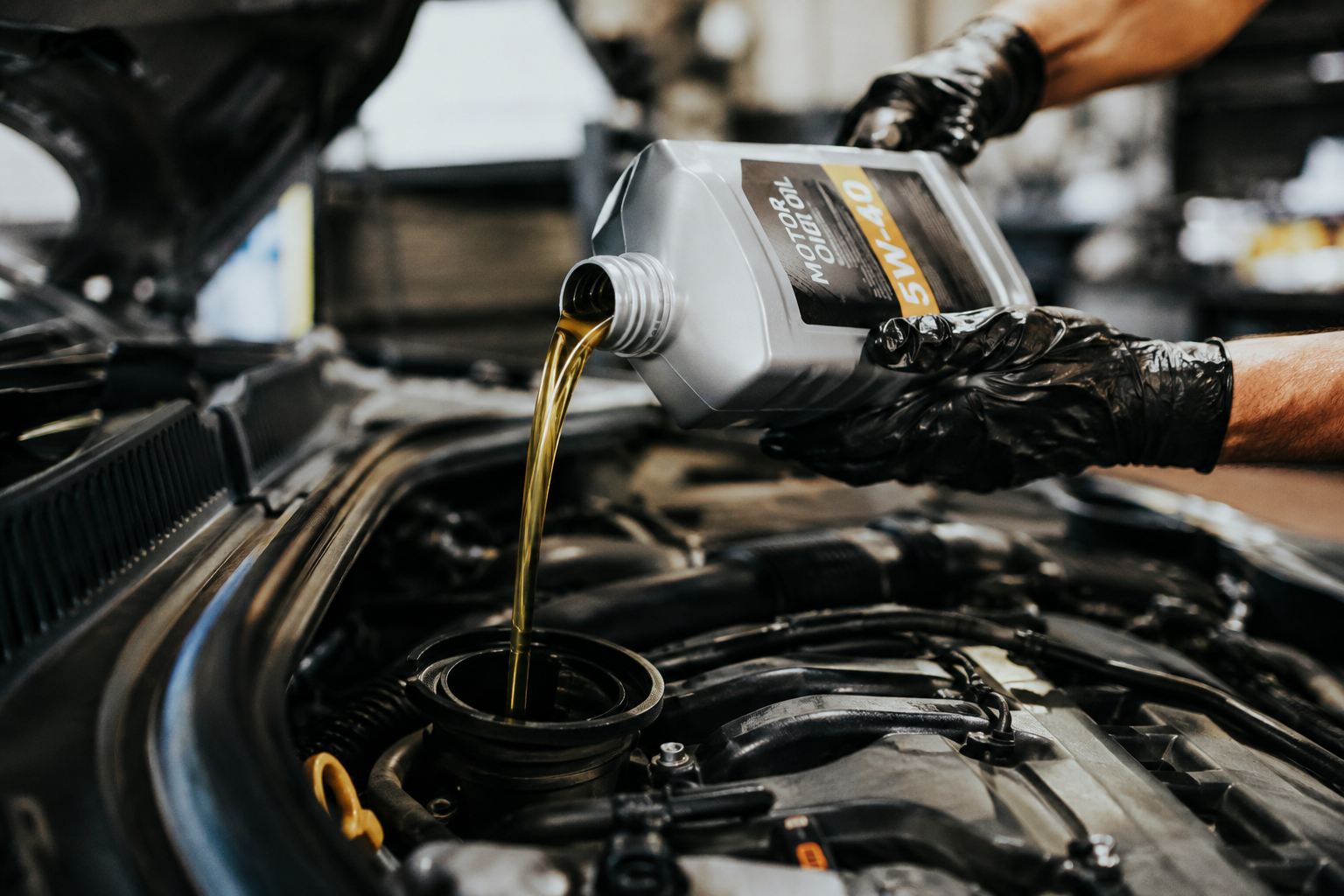
An oil change is easy to put off. It rarely feels urgent, and most drivers only think about it when a mechanic brings it up. But of everything you do to maintain your car, few things matter as much. Engine oil is what keeps your engine's moving parts from grinding themselves apart — and once it breaks down, the damage adds up fast.
The good news: staying ahead of it is simple, cheap, and entirely in your control.
What Engine Oil Actually Does
Inside your engine, dozens of metal parts move against each other thousands of times a minute. Oil is the thin film that keeps them from touching. Take that away, and friction turns into heat, and heat turns into wear.
A clean, well-maintained supply of oil:
Reduces friction between moving parts
Keeps engine temperature under control
Carries away dirt and metal particles as it circulates
Guards against rust and corrosion
Helps the engine run more efficiently
Adds years to the engine's working life
Oil doesn't stay effective forever, though. As it ages, it picks up contaminants and thickens, and the engine has to work harder to compensate. That's when small problems start becoming big ones.
The Real Cost of Delaying an Oil Change
The tricky part about old oil is that it fails quietly. Nothing dramatic happens the day it's due — the trouble builds gradually, and by the time you notice something's wrong, the damage is often already underway.
Left unchecked, old oil tends to show up as:
Engine overheating
Falling fuel economy
Sluggish acceleration
A noticeably louder engine
Faster wear on internal components
Sludge building up inside the engine
Repair bills that dwarf the cost of the oil change itself
Pushed far enough, it can end in outright engine failure — a repair that runs into the thousands, for a problem a $50–100 service would have prevented.
How Often Should You Really Change Your Oil?
There's no single answer — it depends on the car, the oil, and how you drive. Some vehicles are due every 5,000 km; others, running full synthetic oil, can comfortably go 10,000 km or more.
Your owner's manual is the most reliable source, and a trusted mechanic can fine-tune that based on your driving habits. It's worth changing oil sooner rather than later if you drive frequently, tow heavy loads, deal with hot weather, or spend a lot of time idling in traffic — all of that puts extra strain on the oil.
Warning Signs Your Car Is Overdue
Cars are usually good about warning you before things go wrong. Watch for:
The oil warning light on your dashboard
Oil that looks dark or gritty on the dipstick
A burning smell while driving
An engine that sounds louder than usual
Fuel economy quietly getting worse
Smoke from the exhaust
A service reminder you've been putting off
None of these are worth ignoring. A same-week oil change is a far better outcome than the alternative.
Why Reminders Make All the Difference
Most missed oil changes aren't about ignorance — they're about being busy and losing track of time. That's exactly what a good reminder solves: it catches the service before the oil gets old enough to matter.
This gets even more important once you're managing more than one vehicle. A missed reminder on a single car is an inconvenience; missed reminders across a small fleet turn into breakdowns, downtime, and repair bills that stack up fast. Staying on top of it — one car or several — is what keeps vehicles reliable instead of reactive.
The Bottom Line
An oil change is one of the smallest jobs you can do for your car, and one of the highest-value ones. It keeps the engine clean, cool, and running the way it's supposed to — and it's a lot cheaper than the repair bill that shows up when it's neglected.
Personal car or company fleet, the principle is the same: staying ahead of oil changes isn't just maintenance. It's the easiest money you'll ever save on a car.
Clean today. Ready tomorrow.
Book a detailing enquiry or let LawiCars keep your rego, insurance and service dates organised.